
Our approach

Our intention is to advance regenerative food systems at scale.
Nestle's intention to advance regenerative food systems at scale means:
- Advancing: by raising Nestle's voice and using its influence to drive progress, in collaboration with others.
- Regenerative food systems: that go beyond reducing harm to actively restoring ecological systems, while at the same time strengthening the social, economic and human rights foundations that food production depends on - so that food systems can sustain nature, people and livelihoods over the long term.
- At scale: because the planet, communities and individuals need global, systems-level change.
The global food system is at a critical juncture. The effects of a warming planet, the resulting nature and biodiversity loss, and extreme weather events are more evident. Climate change is speeding up the depletion of natural resources and damaging the natural ecosystems we rely on to produce food.
We play our part in addressing these challenges through key initiatives - our Roots of Net Zero integrated climate and nature transition plan (pdf, 14Mb), The Nestlé Agriculture Framework (pdf, 19Mb), and our Human Rights Framework and Roadmap (pdf, 5Mb) - that support our continuous growth and our ability to serve future generations of consumers.
Our objective is to help embed regenerative agriculture as the standard approach across the food industry, addressing environmental, climate and social dimensions together. This transformation goes beyond the adoption of individual practices. It focuses on shifting farming systems towards models intended to contribute to long- term outcomes for people, nature and climate.
We recognize that transforming how food is grown takes time and must be tailored to diverse agronomic, climatic and socioeconomic contexts. The effort requires understanding and support from all actors involved, from governments, academia and NGOs to peer companies and competitors, financial institutions and commodity traders. We all have a part to play in helping make regenerative food systems a reality.
Our regeneration wheel – how we create shared value
The challenges we face – a warming planet, nature and biodiversity loss, extreme weather events, depletion of raw materials, economic inequality – are all closely linked. We aim to address these challenges trough an integrated approach.
We use what we call our regeneration wheel to show how the different areas where we work on Creating Shared Value are interconnected. It reflects our aim to deliver value for people and pets, communities and the planet while ensuring our long-term business success.
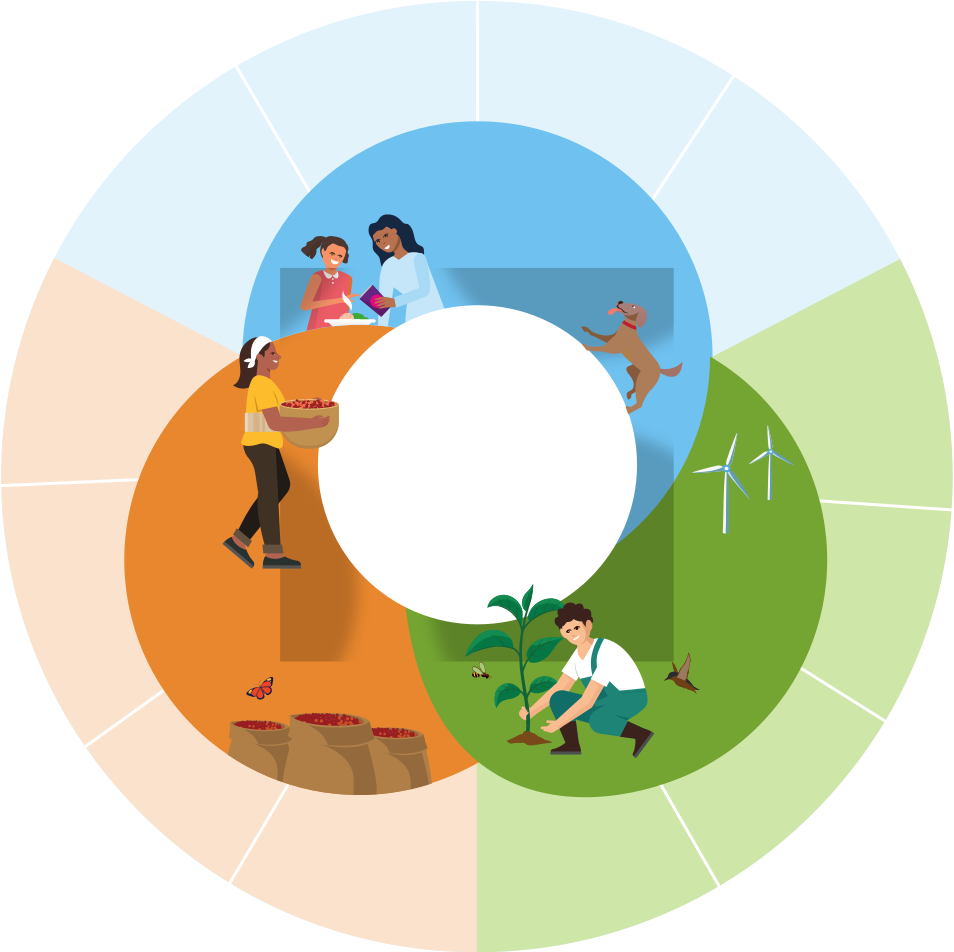
People,
Families
& Pets
People in
Communities
People
& Planet
Affordable
nutrition
Support for
balanced
lifestyles
Packaging
& circularity
Climate
Water
Nature
& biodiversity
Responsible
sourcing
Human
rights
Diversity, equity
& inclusion
Youth
& partners
Improved
nutrition
Tailored
nutrition
Transforming agriculture for a resilient future
Regenerative agriculture, by design, aims to improve soil health, biodiversity and water resources. It promotes the adoption of practices such as the reduction of synthetic inputs, agroforestry, cover crops, reduced tillage, riparian buffers, integrated pest management and integrated soil fertilization management.
We understand that shifting from traditional practices to new ways of farming can be difficult, which is why we follow a holistic approach that includes finance and incentives, training, and creating market demand for ingredients grown on farms that have adopted regenerative agriculture practices.
By 2030, we aim to source 50% of key ingredient volumes from farmers adopting regenerative agriculture practices. The scope of this KPI includes the following ingredient categories: cereals and grains; cocoa; coconut; dairy (derivatives and fresh milk); hazelnuts; green coffee; meat, poultry and eggs; soy; spices; sugar; vegetables; and vegetable fat oils (including palm oil).
Learn more about out plans on this target (pdf, 14Mb).
Supporting a just transition
The shift to regenerative agriculture practices, and on-farm productive land and landscape conservation and restoration practices, must be accompanied by a just transition.
This is why we are helping farmers by providing financial support, remunerating good practices and offering technical and scientific guidance, through programs like the Nespresso Sustainable Quality Plan and the income accelerator program (pdf, 800Kb). This approach, along with the respect and promotion of human rights, is designed to contribute to a just transition to new practices throughout our supply chains.
In line with the Sustainable Agriculture Initiative Platform, Nestlé defines regenerative agriculture as an approach to farming which aims to conserve and restore natural resources, primarily soil, as well as water and biodiversity, while capturing carbon in soils and plant biomass, and to support farmers’ livelihoods. Examples of regenerative agriculture practices include reduced tillage and agroforestry.
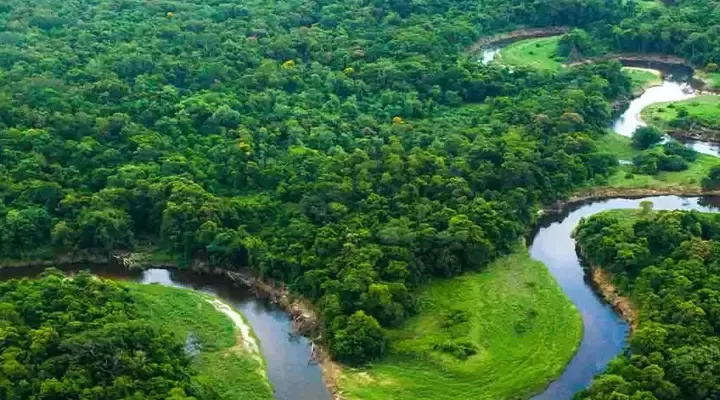
For example, our Global Reforestation Program is undertaking large-scale reforestation projects in our supply chains and sourcing landscapes with projects in Brazil, Colombia, Côte d’Ivoire, Mexico, Vietnam, Australia, China, Honduras, Nicaragua, and Thailand.
We continue to make significant progress toward our aim that our primary supply chains for meat, palm oil, pulp and paper, soy, sugar, cocoa and coffee are assessed deforestation‑free. In 2024, 93.5% of our primary supply chains were assessed as deforestation-free.
Further details can be found in our Non-Financial Statement 2024 (pdf, 4Mb).
Key terms explained
Just transition
Just transition refers to a framework aimed at making the shift towards regenerative food systems at scale as fair and inclusive as possible, creating decent work opportunities and minimizing negative impacts on farmers, workers and communities. It encompasses a range of actions aimed at mitigating the negative social and economic impact of climate and agriculture action, while maximizing the benefits for all stakeholders, especially those most vulnerable (e.g. farmers, women, migrant workers), for example, through building resilience, improving livelihoods and promoting human rights. It requires anticipating, preventing and addressing the social and economic risks associated with climate and agricultural transitions, while supporting the fair sharing of benefits, such as improved resilience, productivity and income opportunities, particularly with smallholder farmers, workers, women and migrant workers who may be disproportionately affected.
Regenerative food system
A regenerative food system is one that goes beyond reducing harm to actively restoring ecological systems, while at the same time strengthening the social, economic and human rights foundations that food production depends on, so that food systems can sustain nature, people and livelihoods over the long term.
Just transition
Just transition refers to a framework aimed at making the shift towards regenerative food systems at scale as fair and inclusive as possible, creating decent work opportunities and minimizing negative impacts on farmers, workers and communities. It encompasses a range of actions aimed at mitigating the negative social and economic impact of climate and agriculture action, while maximizing the benefits for all stakeholders, especially those most vulnerable (e.g. farmers, women, migrant workers), for example, through building resilience, improving livelihoods and promoting human rights. It requires anticipating, preventing and addressing the social and economic risks associated with climate and agricultural transitions, while supporting the fair sharing of benefits, such as improved resilience, productivity and income opportunities, particularly with smallholder farmers, workers, women and migrant workers who may be disproportionately affected.
Regenerative food system
A regenerative food system is one that goes beyond reducing harm to actively restoring ecological systems, while at the same time strengthening the social, economic and human rights foundations that food production depends on, so that food systems can sustain nature, people and livelihoods over the long term.
Nature and biodiversity
Conserving and restoring ecosystems is essential to securing long-term food system resilience and to addressing climate change.
As further described in our Roots of Net Zero integrated climate and nature strategy and transition plan (pdf, 14Mb), we are working to help safeguard natural resources, in particular forests and natural ecosystems, which provide habitats for many species, store water, absorb carbon dioxide, and contribute directly to the livelihoods of Indigenous Peoples and local communities. We do this through landscape initiatives, as well as reforestation projects, and by sourcing ingredients that are assessed deforestation-free.
For example, our Global Restoration Program is undertaking large-scale reforestation projects in our supply chains and sourcing landscapes. We currently have 15 projects across countries including Brazil, Colombia, Honduras, Nicaragua, France, Thailand, Ivory Coast, Australia, Vietnam and China. In 2025, 96.9% of our primary supply chains for meat, palm oil, pulp and paper, soy, sugar, cocoa and coffee were assessed as deforestation-free.* Learn more in the Environmental Disclosures section of our 2025 Non-Financial Statement (pdf, 16Mb).
* This performance number differs from the one available in our Non-Financial Statement 2025 due to a change in the methodology during the first half of 2026. Now we consider ingredients volumes converted back to their original fresh state, instead of their processed form.
Key terms explained
Deforestation-free
Deforestation-free means that commodities in scope were assessed as produced on land that has not been subject to deforestation or conversion after a specific cut-off date that varies by commodity, but no later than December 31, 2020. Commodities accounted as deforestation-free include in part commodities subject to the requirements of the EU Deforestation Regulation. However, the scope of disclosed metric goes beyond these jurisdiction-specific mandatory requirements as part of Nestlé’s global approach on deforestation.
Landscape initiative
On-the-ground multi-stakeholder programs to set common goals, take collective action while reconciling different interests, and monitor progress towards improving social, environmental and economic outcomes at a landscape scale, within the wider geographical area surrounding the farmland used to produce our agricultural raw materials.
Deforestation-free
Deforestation-free means that commodities in scope were assessed as produced on land that has not been subject to deforestation or conversion after a specific cut-off date that varies by commodity, but no later than December 31, 2020. Commodities accounted as deforestation-free include in part commodities subject to the requirements of the EU Deforestation Regulation. However, the scope of disclosed metric goes beyond these jurisdiction-specific mandatory requirements as part of Nestlé’s global approach on deforestation.
Landscape initiative
On-the-ground multi-stakeholder programs to set common goals, take collective action while reconciling different interests, and monitor progress towards improving social, environmental and economic outcomes at a landscape scale, within the wider geographical area surrounding the farmland used to produce our agricultural raw materials.
Addressing climate change
Nestlé's updated climate transition plan builds on its fundamental reality as a nature-dependent business rooted in agricultural communities. The company's long-term success depends on the resilience of people, nature, and climate, which must be addressed together. By strengthening supply security, reducing exposure to fossil fuel volatility, avoiding costs, and increasing resilience to climate impacts, Nestlé aims to deliver a decarbonization pathway that helps conserve and enhance ecosystem services while creating long-term economic and social value across its value chain.
We believe addressing climate change is a business imperative. Guided by our Roots of Net Zero integrated climate and nature strategy and transition plan (pdf, 14Mb), we aim to reduce our net GHG emissions by 50% by 2030 from the 2018 baseline year, and reach net zero by 2050 at the latest.* Learn more about our plans (pdf, 14 Mb).
We are proud of the progress made so far.
For example, we are striving to reduce our reliance on fossil fuels by maintaining 98-100% renewable electricity sourced in all manufacturing sites, owned R&D centers and owned distribution centers at year end.
We are also integrating nature-based solutions - for example, by aiming to source 50% of key ingredients volumes from farmers adopting regenerative agriculture practices by 2030.**
* Net reductions (%) of GHG emissions versus 2018 baseline includes removals from inside Nestlé's value chains and sourcing landscapes (pending the publication of the SBTi guidance on neutralization). Certain categories of emissions are excluded from our SBTi net zero target. Despite these exclusions, 90% of our total Scope 3 emissions are included in the net zero scope and target.
** There has been a change in the key ingredients scope from 2026 onwards. The new scope is: cereals and grains; cocoa; coconut; dairy (derivatives and fresh milk); hazelnuts; green coffee; meat, poultry and eggs; soy; spices; sugar; vegetables; and vegetable fat oils (including palm oil).
Key terms explained
Net zero
In 2019, we announced our ambition to reach net zero GHG emissions by 2050 at the latest. In 2026, we updated our timebound plan, the Nestlé Roots of Net Zero (pdf, 14Mb), which underpins our Group's climate and nature strategy and acts as our transition plan aligned with a 1.5°C pathway as validated by the Science Based Targets initiative (SBTi). We will balance any remaining emissions through high-quality nature-based solutions, such as agroforestry, silvopasture and the restoration of forests and peatland. Read more about net zero.
Nature-based solutions
Nature-based solutions (NbS) are strategies that use natural processes and ecosystems to address societal challenges, benefiting people, climate and nature at the same time. Nature-based solutions are actions aiming to conserve, manage, and restore natural and modified ecosystems, such as agroforestry, soil management and peatland and forest restoration.
Ecosystem services
Ecosystem services are the benefits humans obtain from ecosystems, including provisioning, regulating, supporting and cultural services (e.g. food provisioning, fresh water, climate regulation, air and water purification, and pollination).
Net zero
In 2019, we announced our ambition to reach net zero GHG emissions by 2050 at the latest. In 2026, we updated our timebound plan, the Nestlé Roots of Net Zero (pdf, 14Mb), which underpins our Group's climate and nature strategy and acts as our transition plan aligned with a 1.5°C pathway as validated by the Science Based Targets initiative (SBTi). We will balance any remaining emissions through high-quality nature-based solutions, such as agroforestry, silvopasture and the restoration of forests and peatland. Read more about net zero.
Nature-based solutions
Nature-based solutions (NbS) are strategies that use natural processes and ecosystems to address societal challenges, benefiting people, climate and nature at the same time. Nature-based solutions are actions aiming to conserve, manage, and restore natural and modified ecosystems, such as agroforestry, soil management and peatland and forest restoration.
Ecosystem services
Ecosystem services are the benefits humans obtain from ecosystems, including provisioning, regulating, supporting and cultural services (e.g. food provisioning, fresh water, climate regulation, air and water purification, and pollination).
Regenerative food systems are more than aspirational, they are pragmatic. They benefit the entire supply chain, the whole of the company and all of global society.